Japanese Sashimono — Precision Mortise-and-Tenon Without Nails
Origin: Japanese Carpentry (Edo Period and Earlier)
Furniture and timber-frame joinery cut to interlocking precision so that nails, screws, and glue are unnecessary — taught through long apprenticeships.
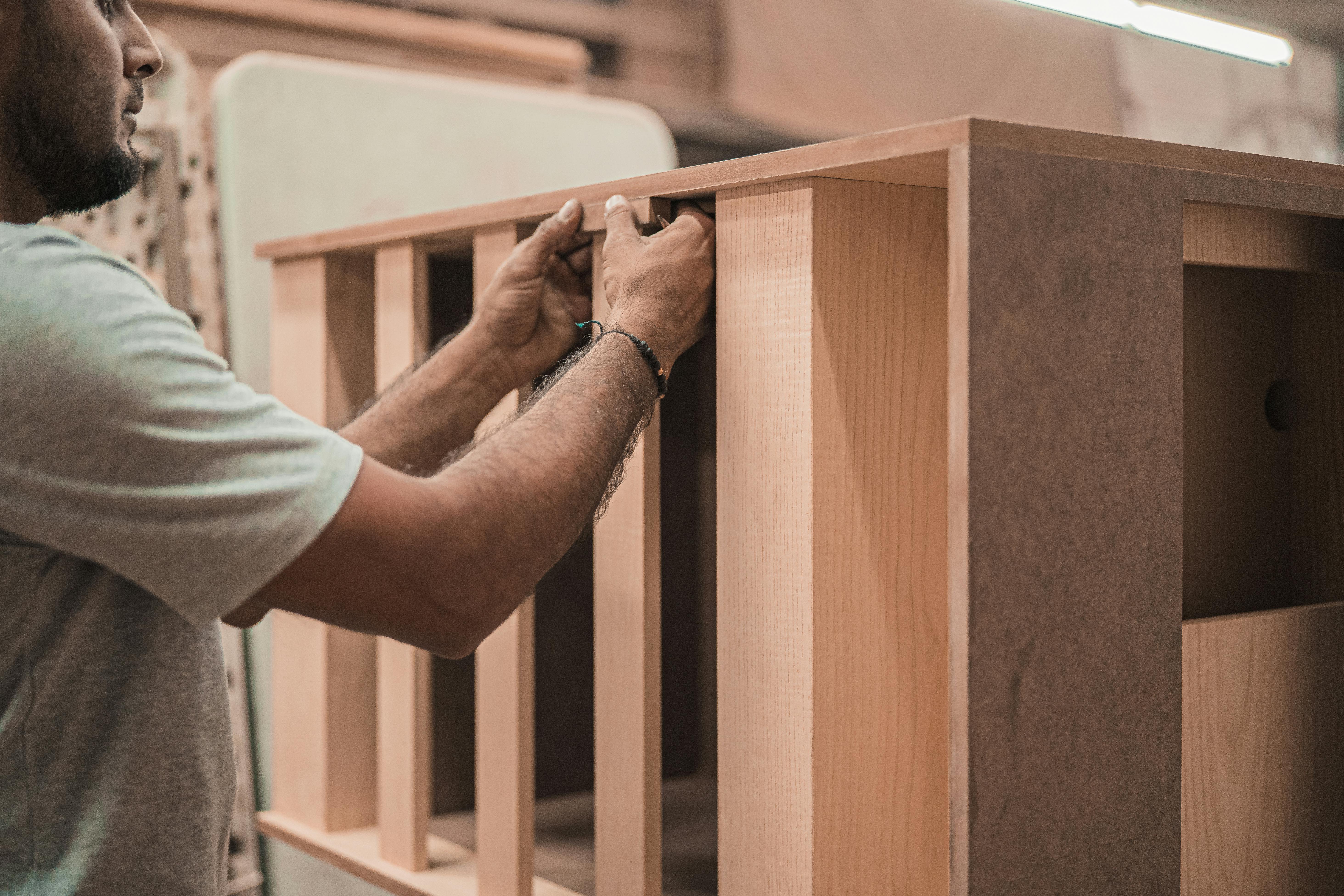
Background & Cultural Context
Sashimono is the family of Japanese joinery techniques used to construct furniture, cabinetry, and architectural elements without nails, screws, or metal fasteners. The discipline originated in the Heian period (794-1185) and was refined to its present sophistication during the Edo period (1603-1868), when sumptuary laws restricted the use of metal in middle-class households and forced craft shops to express ornament and quality through wood-only construction. Sashimono carpenters today are concentrated in Edo (Tokyo), Kyoto, and Hokuriku regional schools, each with distinct joinery vocabularies.
The basic toolkit is small and unchanged for centuries. A kanna (Japanese pull-stroke plane), a set of nomi (chisels) in graded widths, a kebiki (marking gauge), a sashigane (steel square), and a dozuki saw with fine kerf are sufficient for ninety percent of sashimono joinery. The defining feature is that the saw and plane cut on the pull stroke rather than the European push stroke. Pull-cutting allows much finer kerfs and tighter tolerances, which is what makes the precision joinery possible. Apprentices spend the first one to two years sharpening blades and learning to set the kanna shaving thickness in single-digit microns before they begin cutting joints.
The joinery vocabulary is large. The basic dovetail (ari-tsugi) and through-mortise (tomotsugi) are taught early. The more demanding joints — the rabbeted dovetail with secret wedges (sumitsuke), the three-way miter (mitsuke-arigata), and the locking blind dovetail (shihou-zashi) — take many years to cut consistently. The most spectacular joint, the tsugite, is a five-piece interlocking joint sometimes used in shrine architecture; it can join two posts and two beams in all three axes simultaneously and locks with a single concealed wedge. Drawings of tsugite joints have circulated online in recent years and have become a recognizable visual marker for the discipline.
The wood traditionally used is hinoki (Chamaecyparis obtusa), sugi (Cryptomeria japonica), or zelkova (keyaki). All three are straight-grained, stable, and develop a characteristic surface patina from finger-rubbing with no applied finish — the kanna-planed surface is so smooth that varnish actually degrades its appearance. The wood is air-dried for years before use, often by the carpenter's family across generations.
Apprenticeship in a sashimono workshop traditionally lasts ten years. The first three years are spent on tool care and sharpening; the next three on simple joints and surface preparation; the final four on increasingly complex joinery and on building the apprentice's own toolkit. The system has been under pressure since the postwar period as fewer young people enter the trade and as industrial CNC joinery captures the volume market. Government cultural-asset designations now protect several master carpenters as Living National Treasures, with stipends that allow them to teach without taking commercial work.
Modern Application
Sashimono techniques are practical for modern fine furniture, instrument-making, joinery in tea-room architecture, and one-off architectural detail work where the visible joinery is itself the ornament. The biggest barrier outside Japan is tool availability and the time to train the hand. Japanese tools and replacement blades are available through specialist suppliers worldwide (the catalog of Suzuki Tool in Tokyo and several Western importers cover the range). A competent Western furniture-maker who studies pull-stroke tools and the kanna setup can reach functional sashimono competence in two to three years of dedicated practice.
Several formal training routes exist. The Takenaka Carpentry Tools Museum in Kobe offers short courses. Independent schools in Kyoto and Tokyo teach apprenticeship-style programs to non-Japanese students with prior woodworking experience. In the United States, the Center for Furniture Craftsmanship in Maine and the North Bennet Street School in Boston have offered short residencies with visiting Japanese masters. Online instruction has spread rapidly in the last decade; several master carpenters publish structured video courses with English subtitles, lowering the access threshold considerably.
The economic case for sashimono in commercial work is narrow but real. A piece of all-wood joinery furniture produced to sashimono standards commands a premium of five to ten times the price of equivalent screwed or doweled construction; the labor required is roughly comparable but the skill is rare. Architectural applications — tea-room hardware, restoration of heritage temples, custom shrine cabinetry — pay the premium routinely. For a Western maker, the case is usually that sashimono techniques deepen and differentiate the practitioner's overall craft, even if only a fraction of finished pieces showcase the specifically Japanese joinery vocabulary.
Honest limits: not every furniture or architectural problem is best solved with sashimono. Mass production with modern fasteners is faster, cheaper, and adequate for many uses. Sashimono is the right choice when permanence, visible ornament, or all-wood construction (for instrument-making, sacred architecture, or restoration) is the goal. The discipline rewards long apprenticeship and is not a weekend-project pursuit; rushing the apprenticeship produces poor joints and discourages the student.
Tool cost is a one-time barrier but a real one. A starter kanna, three to four nomi chisels, a dozuki saw, a kebiki marking gauge, and a sashigane square amount to roughly six hundred to one thousand US dollars from a reputable Japanese tool supplier. The tools last lifetimes when properly cared for; blade sharpening stones add another two hundred dollars at the start. The kanna setup — flattening the sole, fitting the blade, calibrating the chip-breaker — is the single most difficult skill to acquire and is frequently the bottleneck for new students. Several online video courses now demonstrate the setup process in detail and have shortened the learning curve considerably for self-taught practitioners.
Sources & Citations
- Seike, K. (1977). The Art of Japanese Joinery. Weatherhill / Tankosha.
- Engel, H. (1985). Measure and Construction of the Japanese House. Tuttle.
- Brown, A. (1995). The Genius of Japanese Carpentry: Secrets of an Ancient Woodworking Craft. Tuttle.
- Takenaka Carpentry Tools Museum. Permanent collection catalog (Kobe).
Do you know a solution from this tradition that should be in the archive?
Contribute a solution