Incan Terraces of the Sacred Valley — Andenes
Origin: Incan and Pre-Incan Andean Agriculture
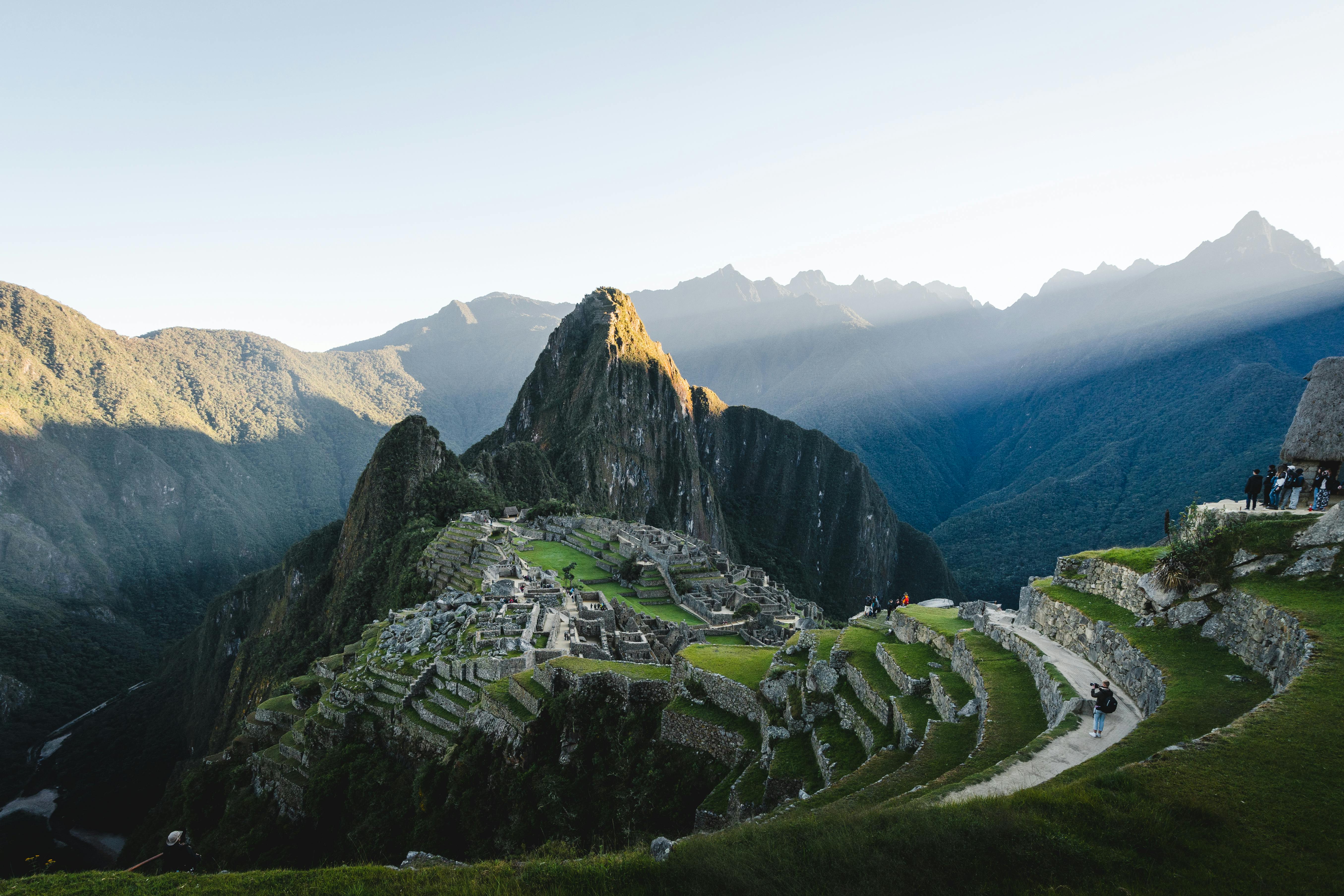
Stone-retained agricultural terraces (andenes) carved into the steep slopes of the Peruvian Andes, with internal drainage, fertile fill, and microclimate elevation zones still producing crops 500 years on.
Background & Cultural Context
The Incan terraces (andenes in Quechua and Spanish) of the Sacred Valley of the Urubamba River in southern Peru are among the most sophisticated agricultural engineering systems built by any pre-industrial civilization. The terrace network covers thousands of hectares across the Sacred Valley and extends throughout the former Inca Empire from southern Colombia to central Chile, with concentrations at Pisac, Ollantaytambo, Moray, and Machu Picchu. Most of the visible terraces were built during the Incan imperial expansion in the fifteenth century, though terrace construction in the central Andes predates the Inca by several centuries.
The terrace structure is engineered with remarkable sophistication. Each andén consists of a vertical or near-vertical stone retaining wall (typically two to four meters tall), a carefully leveled cultivation platform behind it, and a multi-layer subsoil structure that provides drainage, thermal stability, and frost protection. The subsoil layers, from bottom to top, are: large boulders for free drainage; smaller stones for intermediate drainage; coarse gravel; fine gravel; and finally topsoil transported from valley floors to provide the cultivation medium. This engineered soil profile is what distinguishes Incan terraces from simpler regional terrace forms.
The Moray site demonstrates terrace engineering as agricultural research. Three giant concentric circular depressions, with terraces stepped down into them, create microclimates with measurable temperature differences (approximately five degrees Celsius) from top to bottom. The site has been interpreted by archaeologists as an experimental agricultural station where Incan agronomists could test how the same crops responded to different microclimates within easy walking distance, accelerating the breeding of varieties suited to the empire's diverse elevational range. The Incan empire's agricultural achievements — particularly the development of hundreds of potato varieties suited to different microclimates — reflect this systematic experimental approach.
Water management was integrated with the terrace system. Irrigation channels (carved into the bedrock or built of stone) brought water from highland springs and glacial meltwater streams across kilometers of contour, delivering controlled irrigation to terraces by elevation. The channels were precisely engineered with calibrated gradients — steep enough to keep water moving, gentle enough to avoid erosive flow. Several still-functional Incan irrigation channels deliver water to the terraces around Ollantaytambo, Pisac, and Tipón today.
The agricultural output of the andenes underwrote the Incan empire. Estimates based on terrace surface area and documented yields suggest the imperial agricultural system could produce two to four times the food required by the empire's population, with the surplus supporting state granaries (qollqas) and the construction labor force that built and maintained the Incan road and architecture network. The system was a working agricultural infrastructure, not a decorative landscape; modern research increasingly recognizes it as comparable in sophistication to the Roman water-supply systems or the Chinese imperial irrigation works.
Modern Application
Many Incan terraces remain in active agricultural use today. Quechua farming communities across the Sacred Valley continue to grow potatoes, corn, quinoa, kiwicha (amaranth), and vegetables on the terraces, using traditional planting and irrigation techniques alongside modern inputs. The continuity of agricultural use is what has kept the terrace system alive across the colonial period and into the present.
Conservation and restoration projects have repaired collapsed terrace walls and revived disused channels in several areas. The Peruvian National Institute of Culture and several international NGOs have funded restoration work at Moray, Ollantaytambo, Pisac, and elsewhere; the work is performed primarily by local Quechua-speaking workers who have inherited stone-wall and irrigation-channel maintenance skills from previous generations. The Cusichaca Trust and similar organizations document the restoration techniques and train younger generations.
Modern terraced-agriculture projects elsewhere in the world draw on the Incan precedent. Smaller-scale engineered terraces in the American Southwest, Mediterranean Italy and Spain, African highlands (Ethiopia, Rwanda), and the Himalayan region apply the same underlying logic — engineered subsoil, vertical stone walls, integrated water delivery. The Incan technical specifications (particularly the multi-layer subsoil drainage profile) are not commonly replicated in full, but the surface terrace-and-wall pattern is in widespread modern use.
Honest limits: building Incan-scale terraces requires enormous labor input. The original construction depended on the corvée labor system (mita) of the Incan empire — every able-bodied adult man owed several weeks per year of state labor, much of which went into terrace and road construction. Modern terrace projects without comparable labor mobilization are unavoidably smaller in scope. Maintenance of existing Incan terraces is itself substantial work — wall collapses, channel sedimentation, and erosion of terrace surfaces all require ongoing intervention. The system depends on continuous human engagement; abandoned terraces degrade rapidly. The continuing presence of Quechua farming communities in the Sacred Valley is what keeps the terrace system viable as an ongoing agricultural infrastructure rather than a museum exhibit.
Visiting the Sacred Valley terraces is accessible. Pisac, Ollantaytambo, Moray, and Machu Picchu are the primary heritage sites. Tipón (near Cusco) is a less-visited but spectacular Incan irrigation and terrace site that demonstrates the water-engineering side of the system more fully than the better-known sites. Several local trekking organizations offer multi-day walks through terraced villages that combine archaeological interpretation with stays in working farming communities — a model that channels tourist revenue back to the rural populations whose continued presence sustains the terrace system.
Sources & Citations
- Earls, J. (1989). Planificación agrícola andina: Bases para un manejo cibernético de sistemas de andenes. Universidad del Pacífico.
- Treacy, J.M. (1994). Las Chacras de Coporaque: Andenería y Riego en el Valle del Colca. IEP.
- Wright, K.R. and Valencia Zegarra, A. (2000). Machu Picchu: A Civil Engineering Marvel. ASCE Press.
Do you know a solution from this tradition that should be in the archive?
Contribute a solution